
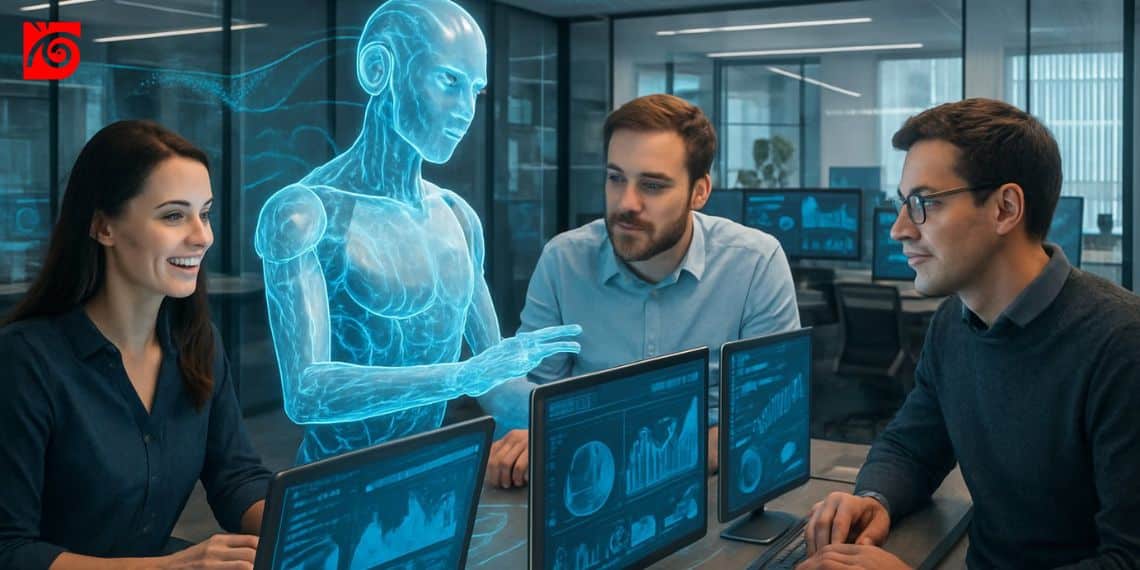
The world ofdigital marketingis evolving rapidly with the emergence of artificial intelligence. Marketing agencies are discovering thatAI can generate contentand analyze complex data, providing a rough draft that then needs to be refined by professionals. This technology is becoming firmly established in the industry, but its role remains that of an assistant rather than a replacement.
Artificial intelligence becomes a powerful toolfor augmented intelligencewhen combined with human expertise.In marketing agencies, this synergy not only automates repetitive tasks but also enhances strategic decision-making and creativity. Humans bring what machines lack: the intuition, emotional understanding, and authenticity needed to create meaningful connections with consumers.
Marketing professionals who embrace this augmented intelligence approach see their potential grow exponentially.AI is transforming marketingby enabling greater campaign personalization and a better customer experience, but it is the human expert who guides this technology, gives it meaning, and ensures that it serves the brand’s strategic objectives.
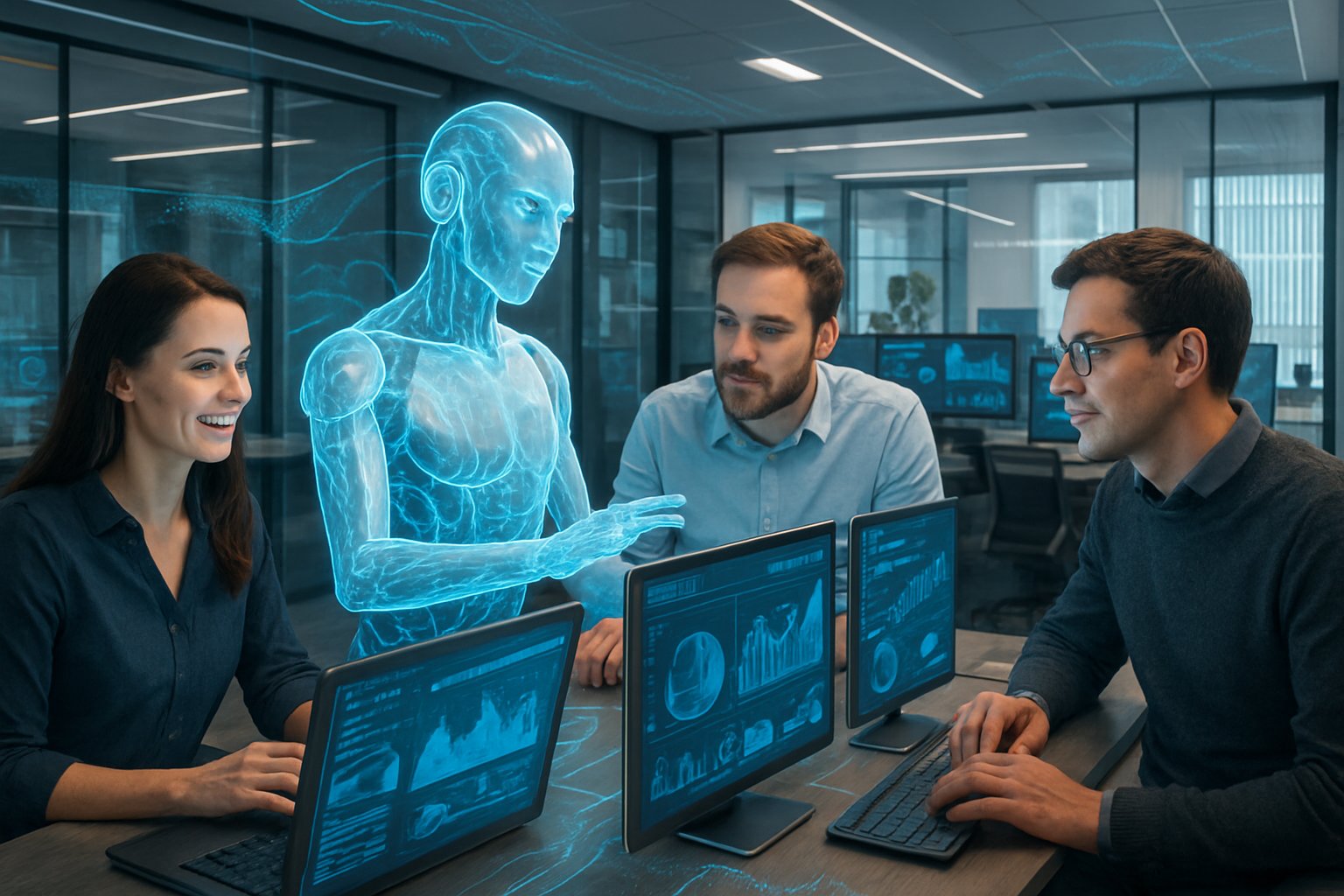
Artificial intelligence is profoundly transforming the digital marketing industry by offering new capabilities while also presenting certain limitations. Integrating it into agencies requires a clear understanding of what it can achieve and its limitations.
AI enables marketing agenciesto automate many repetitive tasksthat previously took up valuable time. Machine learning algorithms quickly analyze large volumes of data to identify trends that the human eye might miss.
This automation results in a significant increase in productivity and a reduction in operating costs. For example, optimizing ad auctions in real time helps improve the return on investment for campaigns.
AI tools can monitor campaign performance around the clock and automatically adjust settings to maximize results. This frees up marketing teams to focus on higher-value tasks, such as developinginnovative strategies.
AI excels atpersonalizing customer experiences, a key factor in improving conversion rates. It analyzes user behavior to create detailed profiles and predict their preferences.
This technology enables the deployment ofhyper-personalized campaignsat scale—something that would be impossible to achieve manually. Messages, offers, and content are tailored to the specific characteristics of each segment or even each individual.
Predictive algorithms identify the optimal time to contact prospects and the most appropriate channel. Thistailored approachboosts consumer engagement and significantly improves the effectiveness of marketing campaigns.
Despite its advantages, AI hassignificant limitations. It lacks intuition and genuine creativity, which are essential for developing truly innovative concepts that resonate emotionally with the public.
Algorithms are entirely dependent on the quality of the data they use. Biased or incomplete information leads to inaccurate results, which can undermine the effectiveness of campaigns.
Ethical issues and the protection of personal data also pose major challenges. Consumers are becoming increasingly concerned about how their information is used, and regulations are becoming stricter.
AI struggles to understand cultural nuances and the subtleties of language, which can lead to inappropriate or poorly targeted messages.
Chatbots and virtual assistants are a perfect example of how AI and human oversight complement each other. These tools effectively handle simple requests but require human intervention for complex or emotionally charged situations.
Incontent creation, generative AI can quickly produce text, images, or videos. However, an expert must verify thecontent’s relevance and alignment with the brand’s values and add a distinctive creative touch.
When it comes to predictive analytics and segmentation, algorithms identify business opportunities, but human expertise remains essential for interpreting this data and turning it into coherent strategies.
The most successful campaigns combine the analytical power of AI with the emotional intelligence and marketing expertise of professionals. This collaboration allows us to leverage the best of both worlds to create truly effective strategies.
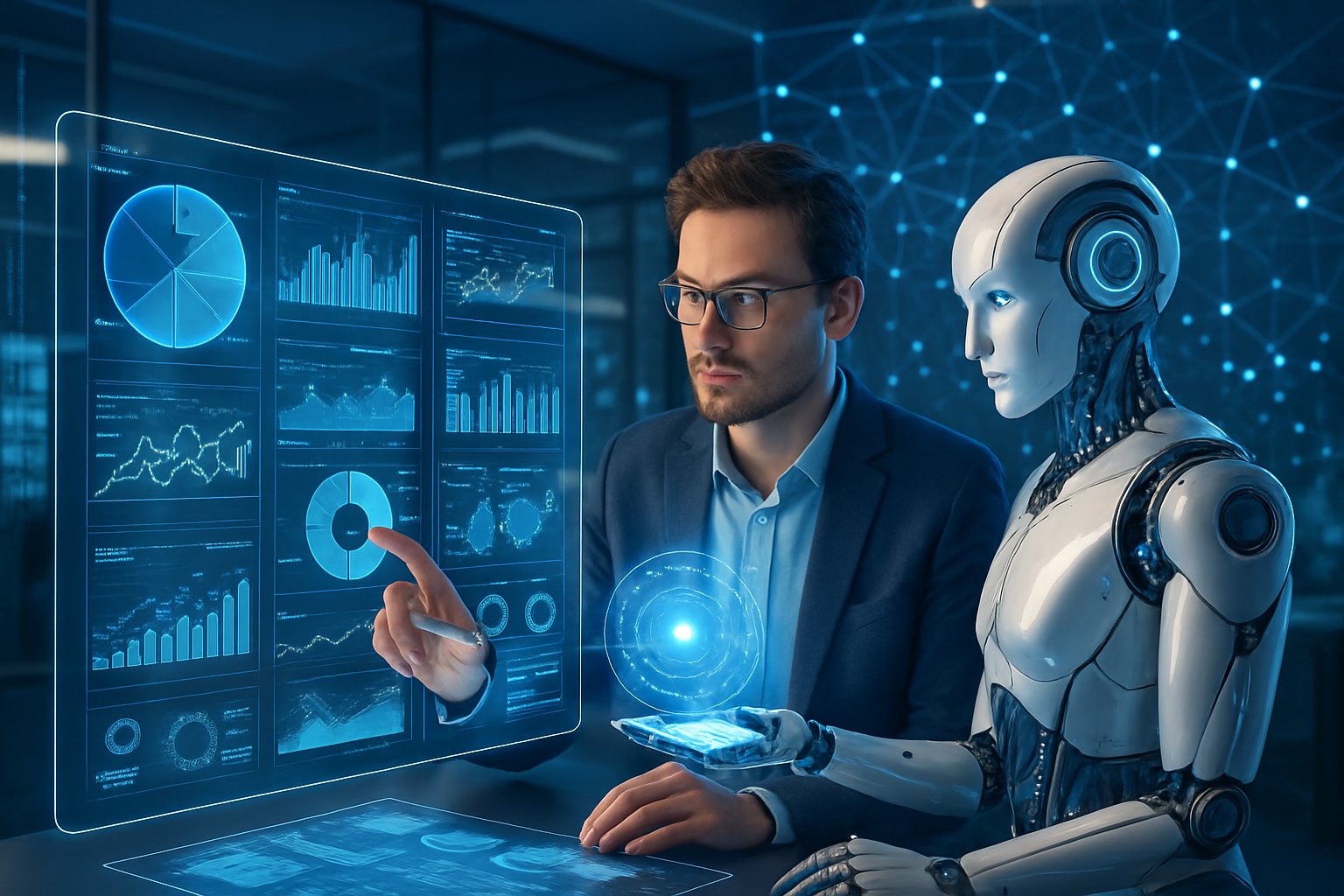
The combination of artificial intelligence and human expertise is driving transformative change in the field of marketing. This synergy maximizes results while preserving the authenticity of campaigns.
Augmented intelligencerepresents the optimal combination of technological capabilities and human expertise. Unlike pure artificial intelligence, it does not aim to replace humans but to enhance their capabilities.
This approach accelerates the analysis of big data while preserving the marketing expert’s critical judgment. AI tools are becoming assistants that enhance human cognitive abilities.
In the marketing sector, augmented intelligence offers several advantages:
Thesynergy between humans and machinesin marketing createsgreater valuethan either could achieve on their own. AI excels at data analysis and automation, while humans contribute their creativity, intuition, and understanding of emotions.
A marketing expert who uses AI can generate campaign ideas based on predictive analytics and then refine those concepts using their creative intuition. This collaboration combines analytical rigor with emotional authenticity.
Marketing strategies developed using this hybrid approach generally strike a better balance between technical effectiveness and emotional resonance. The content produced maintains an authentic voice while leveraging data-driven insights.
Artificial intelligence alone has significant limitations in the field of marketing. Without human oversight, it tends to produce generic content that lacks personality and authenticity.
Algorithms don’t understand cultural nuances, a brand’s history, or the emotional subtleties that make a campaign resonate. Consumers can easily sense this lack of authenticity, which can damage a brand’s image.
Several failures of fully automated campaigns have demonstrated the importance of humaneditorial expertise.The fusion of AI and human intelligencehelps avoid these pitfalls by combining:
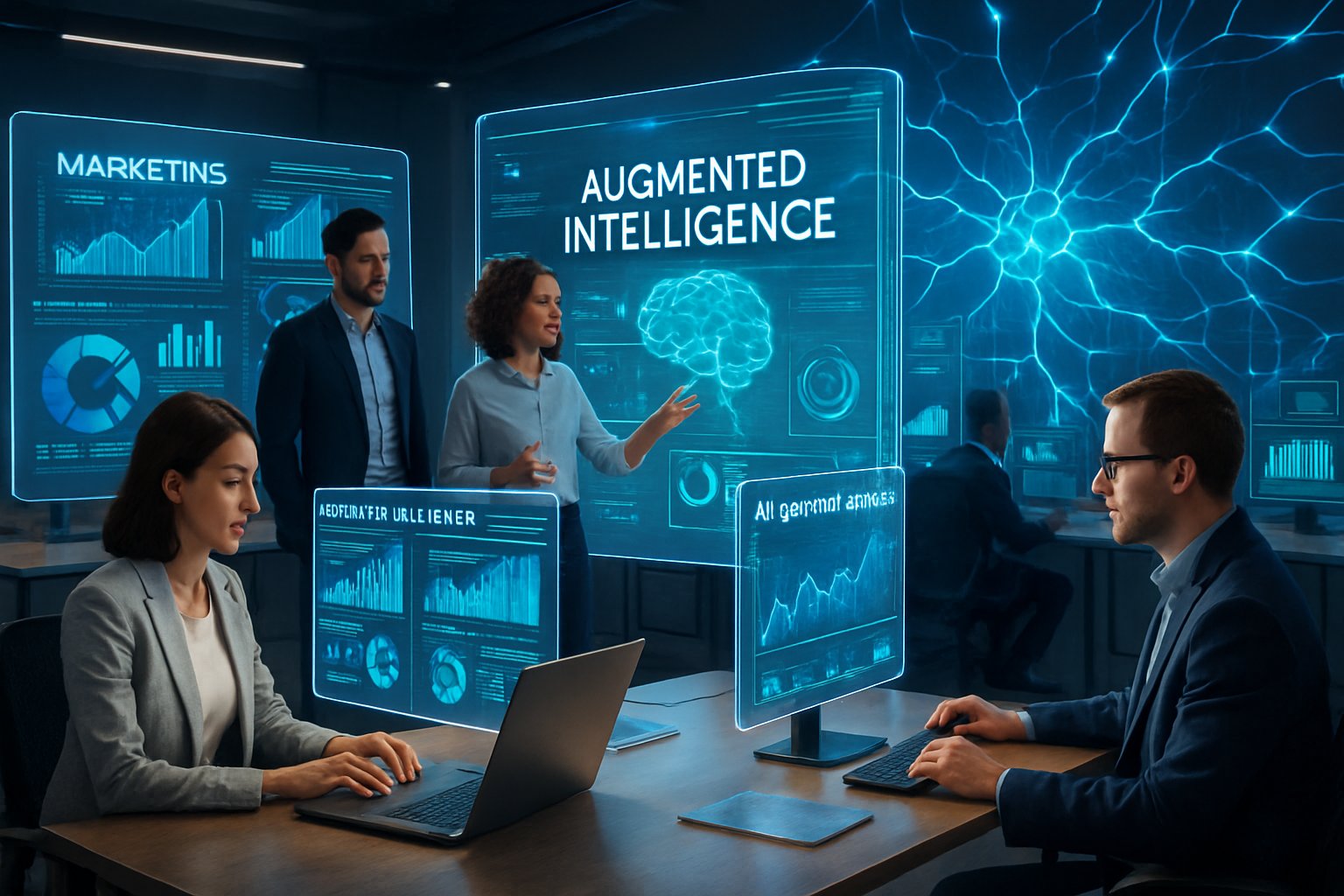
Augmented intelligence is already revolutionizing the day-to-day operations of marketing agencies. It offers tangible opportunities while raising questions about the future of the industry.
Marketing agencies today are adopting hybrid approaches in whichaugmented intelligenceenhances human editorial expertise. ChatGPT and other AI tools now serve as assistants to explorerelevant lexical fieldsand analyze consumers’ search intent.
This combination makes it possible to createricher, more targetedcontent. For example, an agency can use AI to generate a draft article, and then the marketing expert can add their in-depth industry knowledge and creative flair.
Secondary queries identified by AI also help structure more comprehensive content. However, human oversight remains essential to ensure consistency with the brand identity and avoid generic content.
Data analysisis an area where augmented intelligence truly excels. AI tools make it possible to quickly analyze vast amounts of data to identify trends that are invisible to the human eye.
For Google Ads campaigns, this human-machine synergy yields remarkable results:
| Appearance | The Role of AI | Human contribution |
|---|---|---|
| Targeting | Highly precise segmentation | Contextual interpretation |
| Content | Rapid generation of variants | Creativity and Brand Voice |
| Analysis | Big Data Processing | Strategic decision-making |
Marketing agenciesare seeing a significant improvement inopen ratesand return on investment (ROI). A marketing expert who uses these tools effectively can now accomplish in a few hours what used to take several days.
Emerging trends point to rapid advancements in AI capabilities within the marketing sector. Before long, we will likely see these technologies integrated even more deeply into creative and strategic processes.
This development raises significant ethical issues. Transparency is becoming a fundamental value: consumers want to know when they are interacting with AI or a human. Data protection and privacy are also critical concerns.
Companies must now establishguidelines for the ethical useof AI. Those that can strike the right balance between automation and the human touch will gain a significant competitive advantage. Providing ongoing training for marketing teams on these new technologies is also becoming a strategic investment to remain relevant in a constantly changing environment.




