

As you know, the internet is now a tremendous source of potential customers for your business. But you still need to stand out among the countless competitors flooding the web! No matter what your business is, content marketing is therefore essential for attracting prospects and turning them into loyal customers.
What are the guidelines for creating high-quality editorial content? How can you set up and outsource your content production? In short, how do you develop a content marketing strategy? Here are our tips.
It’s no coincidence that 87% of digital marketers use content to guide buyers through the sales funnel. As a key component of your communication strategy, creating editorial content serves a dual purpose:
There are many different types of text content. The most commonly used, particularly in the B2B sector, are:
Each type of content allows you to reach your target audience at a specific stage of the customer journey and is designed to prompt a specific action: sharing on social media, registering for an event, requesting a quote, downloading a brochure, and so on. The key challenge is to guide the prospect toward the ultimate goal: closing the deal. Your editorial strategy is therefore part of a long-term approach.
Before you actually start writing, it’s essential to do some preparatory work to ensure that the content you produce is reliable and relevant to your audience. After all, sharing inaccurate information can damage your credibility in the eyes of search engines and your audience.
According to a study by the Hill Holliday agency, 59% of customers boycott brands that use false information. Conversely, 64% of consumers say they are more likely to make purchases from a company that demonstrates honesty in its brand content.
Factual and realistic content helps establish you as an expert and solidify your authority in your field. The preliminary research phase helps guide the content creation process and prevents you from wasting your marketing budget.
Here are the steps you need to follow:
Think about the business goals you want to achieve to determine the most appropriate type of content and writing style. For example, if you want to increase organic traffic to your site, you should prioritize the use of high-search-volume keywords. If your goal is to convert your readers into leads, you can use copywriting techniques to convince them to download a lead magnet (downloadable content in exchange for their contact information).
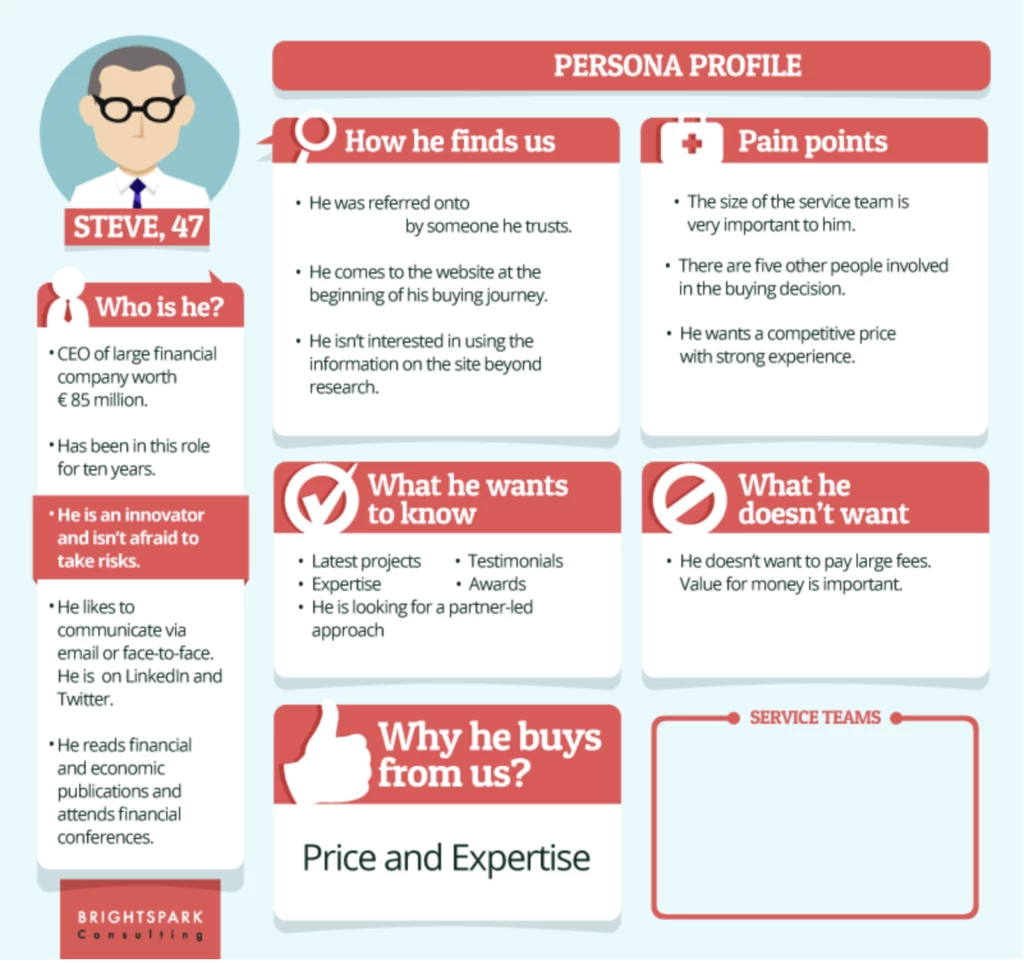
A "buyer persona" is an abstract representation of your ideal customer. This fictional character typically has a first name as well as socio-professional and psychological characteristics.
When creating content, it’s essential to know who you’re addressing. Using a persona allows you to focus on a specific target audience and, as a result, use language and arguments that will resonate with that type of customer. This is the foundation of effective marketing automation.
The creation of a persona is based on market research findings as well as the profiles of your actual customers. To do this, you can, for example:
Good content is content that meets users’ expectations. It is therefore essential to clearly identify your target audience’s search intent. There are four types of search intent, each reflected in the use of specific terms in the search query:
Once again, the search intent should guide the choice of content format: a blog post is ideal for informational searches, while a detailed product page is better suited for transactional searches.
These days, content creation is closely tied to search engine optimization (SEO). Content optimized according to SEO best practices is more likely to rank among the top search results and, therefore, to be read. Conversely, duplicate or low-quality content risks being penalized by Google and pushed down to the third or fourth page. Your website will lose visibility.
You should therefore identify the keywords that are relevant to your business and through which you want your target audience to find you. Certain free or paid tools allow you to rank keywords based on search volume and competition. The more competitive a search term is, the harder it will be to rank well for it, as the top spots are often occupied by authoritative websites.

Source: Semrush // All About Images
The effectiveness of your content marketing depends on developing a content strategy that outlines the following elements:
This roadmap provides a structured framework for creating and sharing your content without getting sidetracked.
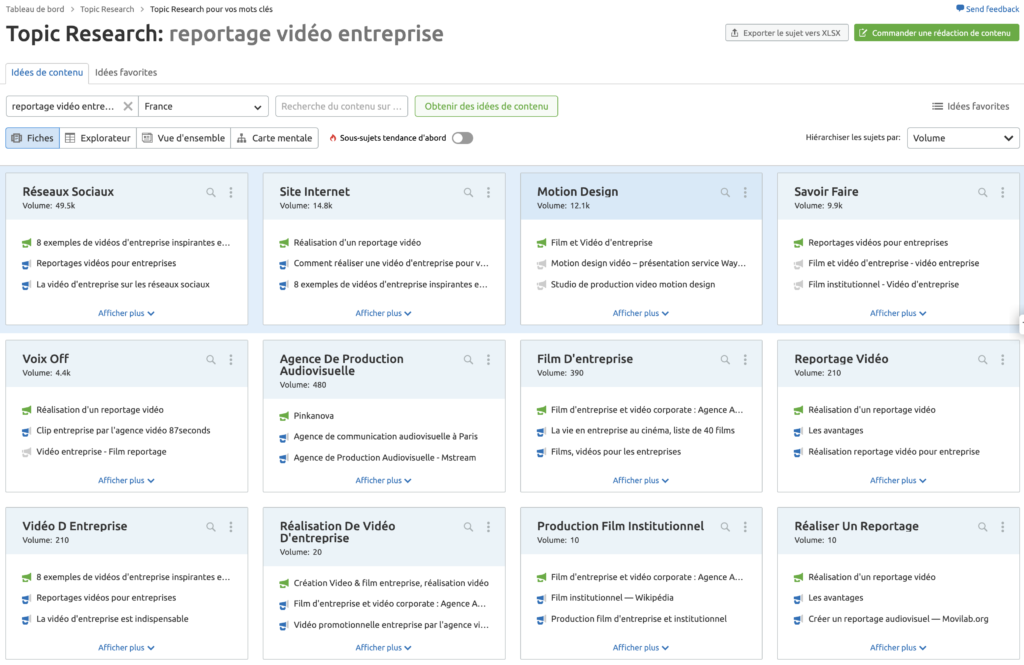
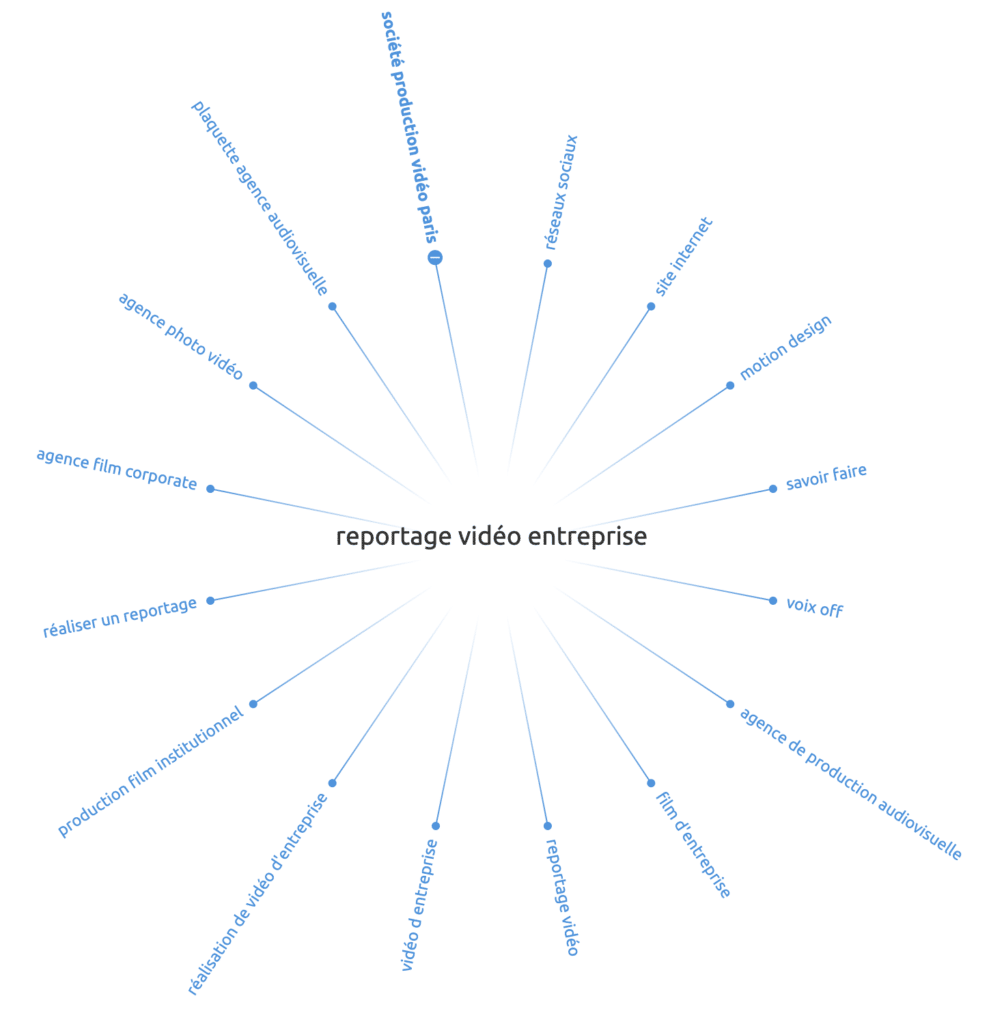
Take the time to come up with compelling ideas that will resonate with your readers and drive results before diving headfirst into web writing. To find inspiration, you can:
Source: Semrush // All About Images
Source: Semrush // All About Images
Once you’ve clearly defined your goals, topics, content formats, and distribution channels, you can create an editorial calendar. Highly valued by content creators, SEO specialists, and digital marketers in general, this tool provides a comprehensive overview of the tasks that need to be completed.
For each publication, please provide the following information:
You can use a simple Excel spreadsheet, or opt for a specialized tool like Asana, the project management software used by Autour de l’Image.
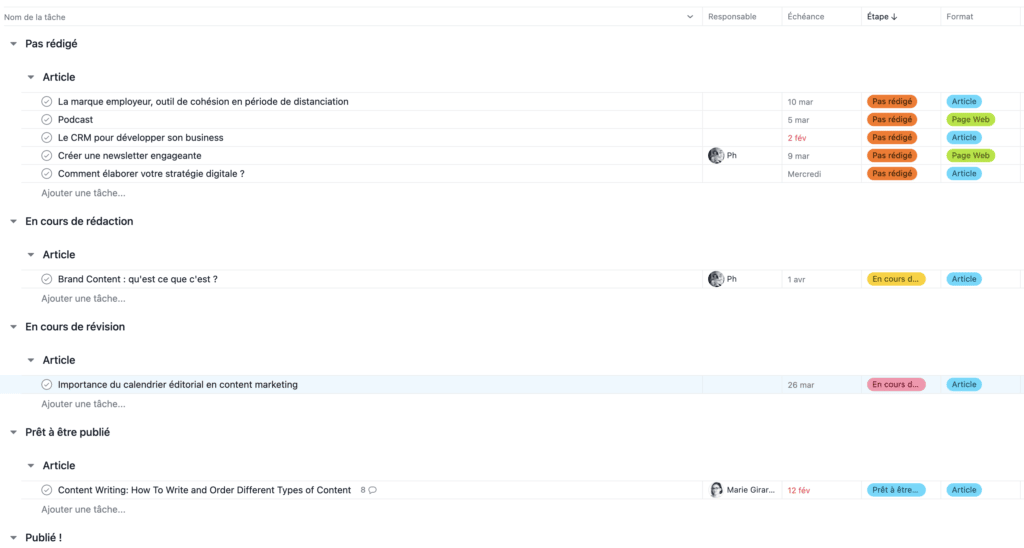
This type of collaborative tool facilitates communication among team members, especially when working remotely. It allows you to monitor the progress of tasks, even from a distance.
Here are a few tips to help you write compelling copy that will convert your prospects:
These tips should be adapted based on the type of content you’re writing. For example, when it comes to newsletters and emails, the subject line is crucial for maximizing open rates. Product pages, on the other hand, will be more appealing if they include visual elements, customer reviews, and detailed descriptions.
Once your content is published, be sure to evaluate its impact byanalyzing KPIs (key performance indicators). Content effectiveness is primarily measured by organic traffic (83%) and sessions/page views (70%). The other most popular metrics are leads (66%) and conversion rate (53%).
As you can see, creating high-quality content is a complex and time-consuming task. To help you with this, you can assign the work to an in-house writer or hire an external service provider. According to a study by the Content Marketing Institute, 84% of B2B companies outsource their content production.
In fact, outsourcing offers a wide range of benefits:
Contrary to popular belief, writing for the web is about more than just writing well. Professional copywriters and web editors know how to choose the right words, tone, and style to create content that aligns with your brand and marketing goals. This content forms your brand content.
The content creation market is divided among three main types of players:
In any case, it is advisableto review the service provider’s references and portfolio to get an idea of their expertise and the companies that have already worked with them.
Once you’ve made your choice, all you need to do is write—or have someone write—a detailed briefing that specifies the following:
Specializing in B2B communication,Autour de l’Image offers content creation and copywriting services. We immerse ourselves in your world to understand the nuances of your industry, enabling us to develop a cohesive and effective content marketing strategy. By creating optimized content, we make your messaging impactful so it resonates with your prospects and customers and encourages their engagement.
Would you like us to handle the production of your editorial content? Contact us to discuss your needs!




